Give the gift of self-knowledgeChoose a gift card
Guide16 min read

What is a horoscope and how does it work?

A plain guide to horoscopes: where they come from, how a daily horoscope is made, what the twelve signs and four elements mean, and how to read yours without taking it too literally.

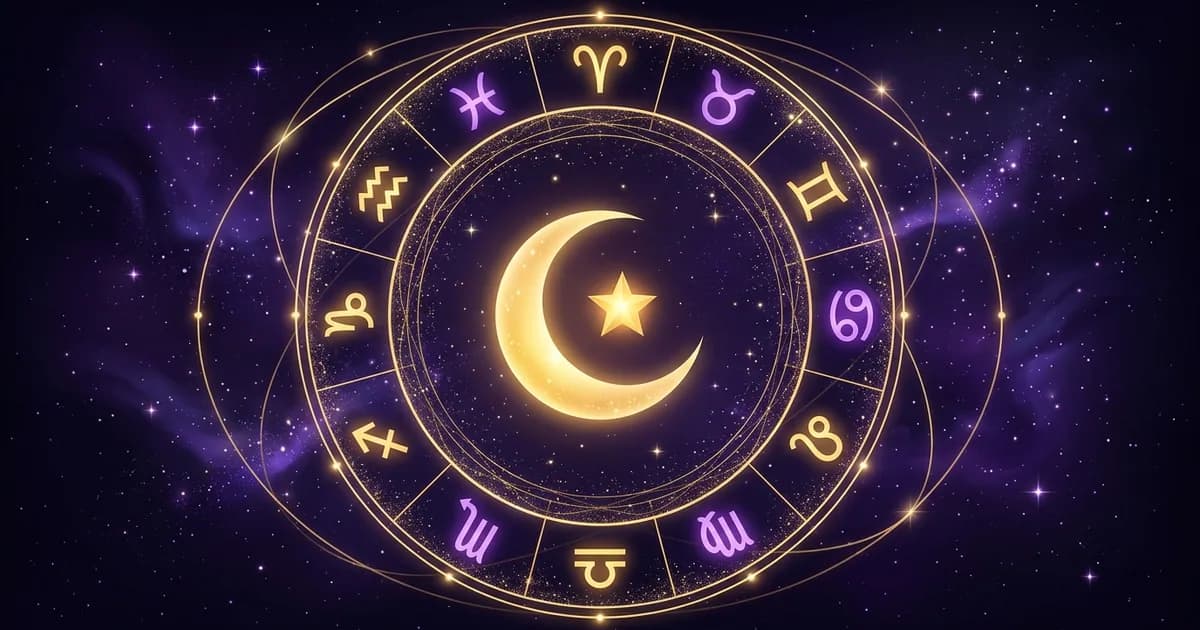
The zodiac wheel with its 12 signs, the basis of every horoscope
The zodiac wheel and its 12 signs: the starting point of every horoscope
1

What is a horoscope?

A horoscope is a reading based on where the Sun, the Moon, and the planets are at a given moment. It takes those positions and translates them into a symbolic language about mood, timing, and character. There are two main kinds. A birth chart (also called a natal chart) is calculated from your exact birth date, birth time, and birthplace. A Sun-sign horoscope uses only the sign the Sun was in on your birthday, and it’s the basis of the daily horoscopes most people read.

The idea is old. Babylonian priests were recording what the planets did and linking it to events on Earth in the second millennium BCE. By about the fifth century BCE, they had divided the Sun’s path into twelve equal signs, and the oldest surviving birth horoscopes date from around 410 BCE. In Hellenistic Egypt, Greek-speaking astrologers combined that tradition with their own geometry and added the houses and the rising sign. That mix spread through Rome and the medieval Arabic world into Europe, and it’s the root of Western astrology today. China developed its own system separately, built around a lunar calendar and a cycle of twelve animals.

The word itself comes from the Greek horoskopos: hora means hour, and skopos means watcher. Originally it was the name for the sign rising on the eastern horizon at a birth. A horoscope literally “watches the hour.”

You can see a current one in our daily horoscope. We write it fresh every day from the real positions of the Sun, the Moon, and the planets for that date. It isn’t a set of stock paragraphs on rotation.

2

How are daily horoscopes made?

A well-made daily horoscope starts with data, not with a blank page. The raw material is the day’s planetary aspects, the angles the Sun, the Moon, and the planets make to each other. When Mars meets Jupiter in a conjunction, for example, the signs those planets rule (Aries and Sagittarius) may feel a lift in energy and motivation. When Saturn sits opposite the Moon, the day can feel heavier, especially for Capricorn and Cancer.

This approach is called transit astrology. A transit is where a planet is right now, compared with a sign or with your own chart. On My Horoscope, the positions come from a professional astrology data service built on the Swiss Ephemeris, the standard astronomical library in astrology software, which is based on planetary data from NASA’s Jet Propulsion Laboratory. So each day’s text matches the sky as it really is that day.

Simplified, the process looks like this:

  1. Get the day’s positions. Where each of the ten planets is (astrology counts the Sun and the Moon as planets), plus the Moon’s phase and the lunar nodes.
  2. Work out the aspects. Which angles the planets form that day: conjunction (0°), sextile (60°), square (90°), trine (120°), and opposition (180°).
  3. Weigh them for each sign. Where each aspect falls relative to the sign and its ruling planet, and how close to exact it is. That margin is called the orb.
  4. Write the reading. Turn those aspects into plain language about the areas people care about: relationships, work, money, and well-being.

Because the sky never repeats itself exactly, neither does the text. We go through the whole process in more detail in How daily horoscopes are made. Or just check your horoscope for today and see how it reads.

3

What are the 12 zodiac signs and their dates?

The zodiac has twelve signs. Each one covers 30° of the ecliptic, the path the Sun appears to trace across the sky over a year. Each sign has a ruling planet and a set of traits that astrology associates with people born while the Sun is there.

SignDatesRuling planetKey trait
AriesMarch 21 to April 19MarsCourage
TaurusApril 20 to May 20VenusPatience
GeminiMay 21 to June 20MercuryCuriosity
CancerJune 21 to July 22MoonSensitivity
LeoJuly 23 to August 22SunCharisma
VirgoAugust 23 to September 22MercuryPrecision
LibraSeptember 23 to October 22VenusHarmony
ScorpioOctober 23 to November 21Pluto (traditionally Mars)Intensity
SagittariusNovember 22 to December 21JupiterOptimism
CapricornDecember 22 to January 19SaturnDiscipline
AquariusJanuary 20 to February 18Uranus (traditionally Saturn)Originality
PiscesFebruary 19 to March 20Neptune (traditionally Jupiter)Intuition

Each sign is an archetype with its own strengths and blind spots. The ruling planet sets the basic tone: Mars gives Aries its fight and its push, while Venus gives Taurus a love of beauty and comfort. Knowing the basics helps you understand yourself a little better, and the people around you too.

Birthdays on the border between two signs (people call this being “on the cusp”) cause a lot of confusion. If you were born on April 19 or 20, you could be an Aries or a Taurus. It depends on the year and the hour, because the Sun crosses into the next sign at a slightly different moment each year, so the dates in any table can be off by a day. You aren’t a blend of both. The Sun was in one sign or the other, and any decent astrology software can tell you which, ours included. Sign up for free and enter your birth time to find out.

4

Why do people read their horoscope every day?

A daily horoscope isn’t a crystal ball. It’s a tool for reflection and for planning your day on purpose. If you read in the morning that it’s a good day for an honest conversation, you’re more likely to notice the chance to have one. If the text flags possible tension at work, you might walk into that meeting a little more carefully.

Millions of people use a horoscope as a morning ritual, a lot like meditation or journaling. It’s a minute to yourself, a reason to stop and think about what matters today. A horoscope cast from your birth chart goes a step further, because it’s written for your chart and not for everyone who shares your sign. On My Horoscope, the daily horoscope for your sign is free, and the personal one is part of paid membership.

Psychology has a couple of things to say about why this works. One is the self-fulfilling prophecy: when you tell yourself in the morning that today is a good day to clear the air with someone, your attention goes looking for the opening, and that makes it more likely to happen. That works whether or not you believe in astrology. The other is less flattering. People tend to recognize themselves in general personality descriptions, which is known as the Barnum effect, so it pays to read with a bit of honest skepticism. Plenty of people take the practical view: they use a horoscope as a daily prompt and don’t lose sleep over whether it’s “really true.”

5

Sun sign, Moon sign, and rising sign: what’s the difference?

Most people know only their Sun sign. It’s set by where the Sun was on your birthday, and it stands for your core: your identity and the direction your life tends to take. Astrology works with two more key pieces, and together the three are known as the big three.

Your Moon sign describes your emotions and your inner world. It’s the part of you that you don’t always show, but it shapes how you react and what you need to feel okay. There’s more in our guide to the Moon sign.

Your rising sign, or ascendant, is the sign that was coming up over the eastern horizon at the moment you were born. It describes how other people see you: your first impression and your social style. The details are in What is a rising sign?

Here’s an example. Say you’re an Aries with a Scorpio Moon and Capricorn rising. You come across as cool and ambitious. Inside, there’s a lot of passion and emotional depth. And underneath both, your basic drive is still Aries: impulsive and ready to act. The Moon changes signs about every two and a half days and the rising sign about every two hours, so even people born on the same day can have different combinations. That’s what makes a birth chart so personal. If you want to learn to read one, start with How to read a birth chart.

6

What are the four elements of the zodiac?

The twelve signs are sorted into four elements, three signs each. The element describes a sign’s basic temperament:

  • ✦ Fire (Aries, Leo, Sagittarius): Fire signs run on energy, enthusiasm, and a need to act. They’re natural leaders who aren’t afraid to take a risk and go after what they want. Their weak spot is impatience and a tendency to leap first.
  • ✦ Earth (Taurus, Virgo, Capricorn): Earth signs bring stability, a practical streak, and patience. They’re reliable and focused on results. They can come across as cautious or slow to accept change.
  • ✦ Air (Gemini, Libra, Aquarius): Air signs are good with words, ideas, and people. They’re social and always looking for something new to think about. They can get lost in their heads and lose track of feelings.
  • ✦ Water (Cancer, Scorpio, Pisces): Water signs are emotionally deep, intuitive, and empathetic. They have a knack for sensing how other people feel. That sensitivity is their gift and also where they’re easiest to hurt.

Signs of the same element tend to understand each other, because they look at the world in a similar way. Compatible elements (fire with air, water with earth) also work well together: fire needs air to burn, and earth needs water to grow anything. Fire with water and air with earth are a harder mix, though that friction can turn into a lot of creative energy. For more on how the elements play out between two people, see our zodiac compatibility guide.

7

How do you read a horoscope the right way?

Most people read a horoscope passively. They glance at it, smile or frown, and forget it by lunch. You get a lot more out of it when you read it actively. Five habits help:

  1. Read it in the morning, not at night. A horoscope works as a frame for the day ahead, not as an after-the-fact explanation of what already happened. Reading it early points you toward what to pay attention to.
  2. Look for themes, not literal predictions. If your horoscope says today is good for clearing things up in a relationship, that doesn’t mean a showdown with your partner. It might be a small misunderstanding with a coworker or a text to an old friend.
  3. Check it against your own gut. If the horoscope mentions trouble at work and everything tells you things are fine, trust yourself. A horoscope is a frame, not a script.
  4. Follow trends, not single days. Real astrological patterns play out over weeks and months. If the same theme keeps showing up, say three days in a row about rethinking your work, that’s worth more attention than any one line.
  5. Keep a horoscope journal. Write down what the day’s reading said and what happened. After a few weeks you’ll start to see which kinds of days tend to affect you and which ones you barely notice.

If you want to go deeper, learn the basics of planetary aspects and transits. Then you’ll understand why your horoscope says what it says.

8

Horoscope myths and facts

Horoscopes come with a lot of myths attached. Here are the most common ones, and what’s really going on:

  • Myth: “Every Aries horoscope is the same.”
    Fact: a well-made horoscope depends on where the planets are that day, not on a fixed template. Ours changes daily with the real sky. It’s true that some sites recycle stock paragraphs, which is one reason horoscopes have a mixed reputation.
  • Myth: “Astrology predicts what will happen to you.”
    Fact: astrology doesn’t predict specific events, like a fender bender on Tuesday. It describes the tone of a period: stretches when tension, calm, creativity, or looking inward is more likely. It works more like a weather report. You can’t plan every minute by it, but you can decide whether to bring a jacket.
  • Myth: “My Sun sign is all I need to know.”
    Fact: your Sun sign is one of three main pieces of your chart, along with your Moon sign and your rising sign. If the description of your Sun sign has never quite fit, your Moon or rising sign is probably somewhere very different.
  • Myth: “NASA added a 13th sign, Ophiuchus, and changed the zodiac.”
    Fact: in 2016, a NASA article pointed out that the Sun also passes through the constellation Ophiuchus, which the Babylonians left out when they divided the sky into twelve. NASA didn’t change anything, and said so. Western astrology uses the tropical zodiac, which is tied to the seasons and starts at the spring equinox. It isn’t tied to the constellations themselves. Your Sun sign hasn’t changed.
  • Myth: “Mercury retrograde is always a disaster.”
    Fact: a retrograde is when a planet appears to move backward in the sky. It’s a normal, regular effect of how we see the planets from a moving Earth. Mercury does it three or four times a year, for about three weeks each time. Astrologers treat it as a good stretch to slow down, double-check, and finish what’s half done. There’s more in Mercury retrograde: what it means.
9

Is astrology a science?

No. Astrology isn’t a science, and we don’t claim it is. When its claims have been tested under controlled conditions, they haven’t held up. In one well-known experiment published in the journal Nature in 1985, astrologers tried to match birth charts to personality profiles and did no better than chance. There’s also no known physical mechanism by which distant planets could shape a person’s character.

Astronomy and astrology share a root, because both began with people watching the sky. Astronomy studies what celestial bodies are and how they move. It’s a science. Astrology uses the same planetary positions but reads them symbolically, looking for meaning that relates to human life. It’s better understood as a language of symbols. Like any language, it makes sense to the people who learn to read it.

What does matter is which data a horoscope is built on. The positions themselves are astronomy, and they’re either right or wrong. On My Horoscope, we pull real planetary positions every day: where the planets are, the angles between them, and their transits. The reading on top of that is interpretation, and we try to be clear about which part is which.

None of this makes a horoscope worthless. People have used astrology for thousands of years as a way to reflect, to mark time, and to talk about their lives. It gives you a story to think with, and a reason to stop once a day and ask how things are going. That’s the spirit we offer it in: for reflection and entertainment, not as a prediction of facts and not as medical, legal, or financial advice.

10

Personal horoscope vs. Sun-sign horoscope

When you read a horoscope in a magazine or on a general site, you’re getting a Sun-sign horoscope: one text for everyone on Earth who shares your sign. That’s roughly one person in twelve, hundreds of millions of people. If it doesn’t always fit, that’s no surprise.

A personal horoscope works from your whole birth chart: your Sun sign, your Moon sign, your rising sign, the positions of all the planets, and above all how today’s planets line up with the ones in your chart. That’s what we do for members. Personal daily, weekly, and monthly horoscopes start with the Star plan at $4.49 per month, and you can compare the plans on our membership page.

Here’s the practical difference. A Sun-sign horoscope might say, “A challenge comes up at work today.” A personal horoscope can say that today Mars is moving through your 10th house (career) and squaring the Saturn in your birth chart (authority), so it may feel like your boss is leaning on you harder than usual. It’s the same sky, read for one chart.

Which one you want is up to you. If a horoscope is a small daily ritual for you, the Sun-sign version is plenty. If you want to follow your own patterns more closely, such as when you tend to push at work, when relationships take more of your energy, and when you need rest, it makes sense to go deeper. We compare the two side by side in Personal horoscope vs. Sun-sign horoscope.

11

Where should you go next?

If astrology has caught your interest, here are five good next steps:

  1. Read today’s horoscope and see for yourself how a text written from the day’s real sky reads.
  2. Find your rising sign. Without it, you know only one of your big three. You’ll need your birth time.
  3. Get to know your Moon sign. It explains a lot about why you react the way you do.
  4. Meet the 12 houses. Houses map specific areas of life, such as career, relationships, health, and money, and show where a planet in your chart plays out.
  5. Sign up for free to get the daily horoscope for your sign and a tarot card of the day, and to see your Sun, Moon, and rising sign in your profile.

Astrology is a big subject, and people study it for a lifetime. But even the basics you’ve read here give you a better way to think about yourself and the people around you. Enjoy the exploring.

Frequently asked questions

Q:What is a horoscope in simple terms?

A horoscope is a reading based on where the Sun, Moon, and planets are at a certain moment. A birth chart uses the moment you were born. A daily horoscope uses today’s sky and describes the mood it suggests for each zodiac sign. It’s meant for reflection, not as a forecast of specific events.

Q:Are horoscopes real or true?

The planet positions behind a good horoscope are real astronomy. The meaning drawn from them is interpretation, and controlled studies haven’t found evidence that astrology predicts personality or events. Many people still find a horoscope useful as a daily prompt to reflect. It’s best read as a mirror, not as fact.

Q:What’s the difference between a Sun-sign horoscope and a birth chart?

A Sun-sign horoscope is a general text for everyone born under the same sign, about one-twelfth of the population. A birth chart is calculated from your exact birth date, time, and place. It includes ten planets, twelve houses, and the aspects between them, so it’s specific to you in a way a sign alone can’t be.

Q:How often does a daily horoscope change?

A real daily horoscope changes every day, because the sky does. The Moon moves into a new sign about every two and a half days, and the angles between planets shift constantly. On My Horoscope, we write each day’s horoscopes from that day’s planetary positions. We don’t rotate stock texts.

Q:Which zodiac signs are most compatible?

As a rule of thumb, signs of the same element get along easily, and so do fire with air and water with earth. But two Sun signs are only the start. How two people really fit depends on both full birth charts, including each person’s Moon, Venus, and Mars. Treat sign compatibility as a conversation starter.

Q:How do I find my rising sign?

You need your birth date, your exact birth time, and your birthplace. The rising sign changes about every two hours, so the time matters most. Your long-form birth certificate usually lists it. On My Horoscope, you enter those details when you sign up for free, and your rising sign is calculated for you automatically.

Q:Can a horoscope help me make decisions?

A horoscope can’t make a decision for you, but it can give you a useful frame. If today’s text says it’s a good day to talk, that might be the nudge to start a conversation you’ve been putting off. Use it next to your own judgment. For health, money, or legal questions, talk to a qualified professional.

Q:Why doesn’t my Sun sign sound like me?

That’s very common. Your Sun sign is one piece of your chart. If your Moon sign or rising sign is in a very different sign, those often show more clearly in daily life than the Sun does. The Sun describes your core, which isn’t always what’s on the surface. Looking at your big three usually clears it up.

Get a horoscope written for you

Sign up for free and get a daily horoscope based on your birth chart, a tarot card of the day, and deeper readings.