Give the gift of self-knowledgeChoose a gift card
Guide14 min read

How daily horoscopes are made, step by step

A daily horoscope starts with where the planets are today. A general one compares that sky with your Sun sign, so everyone with your sign reads the same text. A personal one compares it with your whole birth chart. Here’s how we make both, step by step.

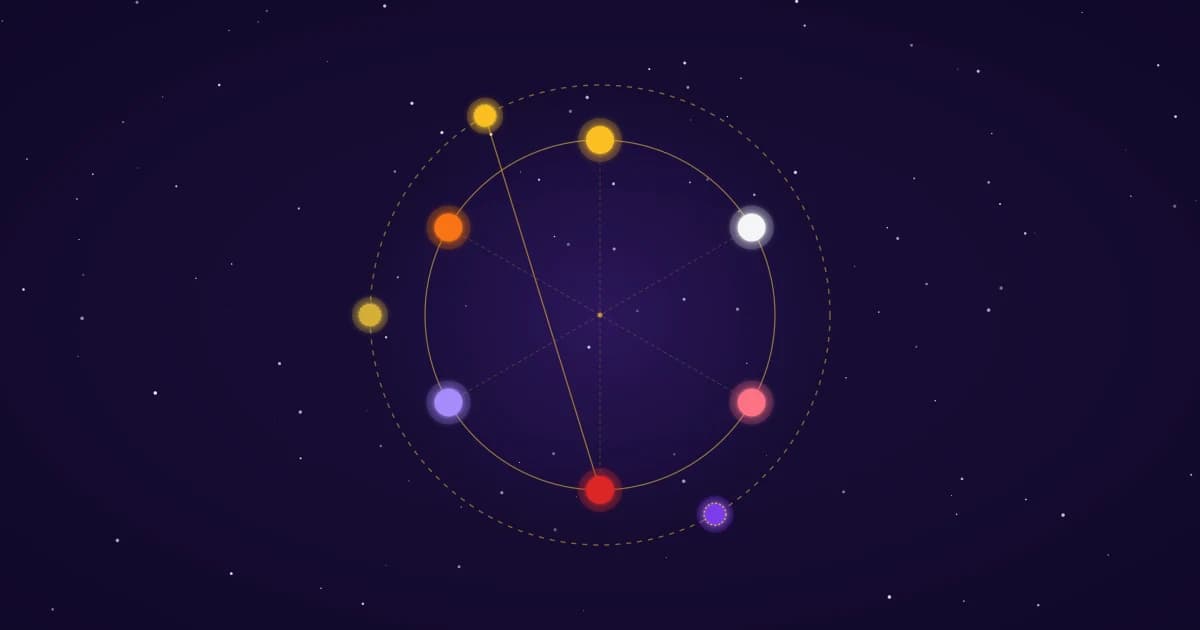
A birth chart with transiting planets on an outer ring, showing how a daily horoscope is made
Inner wheel: your birth chart. Outer dotted path: where the planets are moving today.
1

How are daily horoscopes made?

A daily horoscope is made by taking the positions of the planets for a given day and interpreting what they mean for a sign, or for one person. A general daily horoscope compares today’s sky with each of the 12 Sun signs, so everyone who shares your sign reads the same text. A personal one compares the same sky with your full birth chart, which nobody else shares.

Open almost any horoscope site and you’ll see 12 paragraphs, one per zodiac sign. Open the daily horoscope on My Horoscope without logging in and you’ll find that too: a text for your Sun sign, built on that day’s astronomical data. Not every site does that part, and we’ll get to why it matters.

Once you add your exact birth time and birthplace and move to a paid plan, your horoscope looks different. It names the planet crossing your Moon today. It points to the area of your life that’s likely to be in motion. It tells you when to take a break, based on how today’s sky meets your own chart.

So there are two slightly different processes behind a daily horoscope: one for a general daily outlook, one for a detailed personal reading. This article walks through both, so you can decide which one fits you.

2

What changes in the sky every day?

Before the process itself, it helps to know what’s being “read.” The sky is never the same two days in a row. Astrologers track several things that keep changing:

  • The positions of 10 planets: the Sun, Moon, Mercury, Venus, Mars, Jupiter, Saturn, Uranus, Neptune, and Pluto (astrology counts the Sun and Moon as planets). The fast ones, like the Moon, Mercury, and Venus, shift noticeably within hours or days. The slow ones, like Saturn, Uranus, Neptune, and Pluto, take years to cross a sign.
  • The Moon’s sign: the Moon passes through each of the 12 signs in about two and a half days. A day with the Moon in Libra has a different emotional climate than a day with the Moon in Scorpio.
  • The Moon’s phase: eight phases in a cycle of about 29.5 days, from new moon through the waxing phases to full moon and back through the waning ones. The phase changes every three to four days, and astrology reads it as a rhythm: a time to start, grow, harvest, and rest.
  • The current aspects: the angles between planets (conjunction 0°, opposition 180°, trine 120°, square 90°, sextile 60°). The exact aspects shift from hour to hour.
  • The planetary ruler of the day: Monday belongs to the Moon, Tuesday to Mars, Wednesday to Mercury, Thursday to Jupiter, Friday to Venus, Saturday to Saturn, and Sunday to the Sun. This never changes, but it gives each weekday its own color.
  • Retrograde planets: times when a planet appears, from Earth, to move backward. Mercury does it about three times a year for roughly three weeks, and it changes how the day is read. More in our guides to Mercury retrograde and transits.

What does not change is your birth chart, the snapshot of the sky at the moment you were born. It’s your astrological fingerprint, and it’s calculated only once. You can read more about it in our guides to the rising sign and the 12 houses.

3

Are free daily horoscopes real, or just recycled text?

One thing before the technical steps. Many horoscopes you find online are written in advance and rotated out of a database. “Scorpios are in for a great week” is a template, not a calculation. With a setup like that, a Monday horoscope for Aries can come around again months later, word for word, no matter what the sky is doing.

We do it differently. Even our free plan, Seeker, gets:

  • Fresh data every day: the calculation runs automatically every day at midnight Central European Time (late afternoon or evening in the US), from the planets’ real positions, not from a prepared table.
  • Real astronomical data from Swiss Ephemeris, the ephemeris library professional astrologers around the world rely on.
  • Four areas of life: love, career, health, and money, in place of one general paragraph.
  • Lucky numbers and a color of the day as a small extra.
  • Twelve distinct horoscopes, one written for each Sun sign.

If you want a morning ritual with a solid daily outlook and no account, Seeker covers it, and it stays free. If you want to go further and get a reading built on your chart, there’s a layer above it. We’ll take that apart below.

4

How is the free daily horoscope for each sign made?

Seeker is our free plan, and the public daily horoscope doesn’t need your birth date or time. You only need to know your Sun sign. Here’s how that day’s horoscope comes together:

  1. Pulling the astronomical data: every day at midnight Central European Time, our system calls a professional astronomy service and gets the current positions of all 10 planets for the day. The data comes from Swiss Ephemeris, the standard professional astrologers use worldwide.
  2. Calculating aspects for each sign: the system works out which angles today’s planets make relative to the Sun’s position in each of the 12 signs. For Aries, for example, it looks at what Mars (the ruler of Aries) is doing today and how it relates to the other planets.
  3. Interpreting for each sign: those aspects become twelve horoscopes, one per Sun sign. Each text describes the day’s influence on love, career, health, and money from that sign’s point of view.
  4. Saving and serving: the twelve finished texts are stored, and until the next update they’re what you read as the daily horoscope for your sign.

The Sun is the core of your chart, and on any given day it sets the main theme: what you’re likely to be dealing with, what to watch for, and where an opening might be. For a daily outlook, that’s plenty.

What the free version can’t take into account is your own birth chart: your Moon, your rising sign, the other planets, and the 12 areas of life laid out for the moment you were born. Those layers open with the Star plan and up, once you give us your exact birth time and birthplace. That’s no knock on Seeker. It’s the next level of depth for people who want to go from the broad theme of the day to the details of their own life.

Try it

Open the daily horoscope for your sign and see what the planets are up to today. It’s free, with no sign-up.

Read today’s horoscope →
5

How is a personal horoscope made from your birth chart?

Once you have a paid membership and you’ve added your exact birth time and birthplace, your daily horoscope is made a different way:

  1. A one-time calculation of your birth chart: when you enter your birth details, we calculate your own snapshot of the sky. It holds the positions of all 10 planets in their signs and your own layout of the 12 houses, based on the exact time and place you were born. We store this chart once. It’s your astrological fingerprint, and it doesn’t change for the rest of your life.
  2. A daily calculation of your personal transits: every day we look at how the planets’ current movement meets your particular chart. A general statement would be “Mars is in Aries today.” Yours is specific: “transiting Mars is opposite your natal Sun today.” This is calculated separately for each paying member.
  3. Weighing the aspects: out of dozens of possible transits, the system picks the strongest ones (those with the smallest gap from exact, called the orb) and the ones most relevant to your day. This step decides what today’s reading will be about.
  4. Mapping to areas of life: each transit lands in a specific house of your chart. When Venus crosses your 7th house, we’re talking about partnership. When Mars enters your 10th house, we’re talking about career. A horoscope for a whole sign can’t get this specific.
  5. A personal interpretation: the selected transits and houses become a text about your day in particular: how you’re likely to feel, where to look for an opening, what to go easy on, and what today may mean for your relationship or your work. It isn’t pulled from a template.

Here’s the difference in practice. A general daily horoscope for Libra might say, “Watch for misunderstandings today.” A personal one might say: “Mercury is crossing your 3rd house today and squaring your natal Saturn. A conversation with a sibling or a close coworker may get stuck on the details. Hold off on final agreements until after 2 PM.” That’s a different kind of text.

What each plan adds: Star ($4.49 per month) gives you the personal daily horoscope plus a personal weekly and monthly one. Cosmos ($7.49) adds a personal erotic horoscope, your birth chart, personal transits, and 15 in-depth tarot readings a month. Oracle ($9.49) adds 5 in-depth dream interpretations a month and a daily note from Astra, your astrology guide. Chat with Astra is part of every paid plan (learn more on the Astra page).

See the difference for yourself

A membership opens a personal daily horoscope written from your birth chart. Plans start at $4.49 per month and renew monthly. Cancel anytime in Settings.

See membership plans →
6

General vs. personal horoscope: what’s the difference?

To make the difference concrete, here’s a table with three levels of daily horoscope: a typical template-based horoscope site, our free Seeker plan, and our paid plans from Star up. The rows show what each horoscope takes into account.

What’s taken into accountTypical siteSeeker (free)Star and up
Real astronomical data every dayOften notYesYes
Updated daily (no rotating templates)Often notYesYes
4 areas of life (love, career, health, money)SometimesYesYes
Lucky numbers and a color of the daySometimesYesYes
Sun signYesYesYes
Moon signNoNoYes
Rising signNoNoYes
The 10 planets in your chartNoNoYes
12 houses (areas of life)NoNoYes
Transits to your natal planetsNoNoYes (daily)
Personal weekly and monthly horoscopeNoNoYes
Personal erotic horoscopeNoNoCosmos and Oracle
Your birth chart and a personal transits viewNoNoCosmos and Oracle
A daily note from Astra, written for youNoNoOracle

The “typical site” column describes template-based horoscopes in general, not any one competitor, and some sites do calculate theirs. In short: the free Seeker plan already runs on fresh astronomical data every day, with four areas of life. Star and up add your birth chart to the calculation: your Moon, your rising sign, your houses, and the transits to your own planets.

7

An example: how one day’s horoscope comes together

Let’s take one day and follow both processes. Say your Sun sign is Libra.

For Seeker (free)

The system pulled the day’s astronomical data. For Libra, it found that Venus, the ruler of Libra, is in a harmonious trine with Jupiter. That became a horoscope about easy conversations, openness to new people, and a relaxed day around money. Every Libra who opens the daily horoscope that day reads the same text, and it’s a solid daily outlook for anyone who doesn’t want to set up an account.

For a paying member: Daniel, a Libra

Daniel’s birth chart has the Sun in Libra in the 5th house (creativity, romance), the Moon in Pisces in the 9th house (big-picture plans), and Cancer rising. For today, the system found two things that matter:

  1. Transiting Venus is moving through Daniel’s 5th house and forming a conjunction with his natal Sun. That combination lifts creative and romantic energy, so it’s a good day for Daniel to write something kind to his partner or start a creative project.
  2. Transiting Mars is crossing his natal Moon in the 9th house, which may bring a burst of feeling around travel, study, or long-term plans. More likely in the evening than in the morning.

Daniel gets a reading that ties those two things together and suggests when to focus on what. His reading goes into personal details a general horoscope can’t cover, because nobody else has the same birth chart. Both levels are useful. They just work at different depths.

8

Where to go from here

If you’re curious about how horoscopes are made, here are good next steps:

  1. Read today’s horoscope for your sign and see for yourself what Seeker gets.
  2. Turn it into a morning ritual. Here’s how to fit a horoscope and a card of the day into five minutes with your coffee.
  3. Learn what a rising sign is. Without it, you’re missing a big part of the picture. You need your exact birth time to calculate it.
  4. Get to know transits. They’re the technique behind every personal daily horoscope.
  5. Learn the aspects: trine, square, opposition, conjunction. Knowing what they mean lets you start reading a chart on your own.
  6. Read our full method. The data source, the house system, how we handle sign changes to the minute, and how we treat your data.
  7. Compare membership plans. If you want a personal horoscope from your birth chart, this is the first step.

Astrology isn’t fortune-telling, and it doesn’t deal in guarantees. It’s a framework for paying attention to your day, for reflection and entertainment, and how well that framework fits you depends on how much of your own birth data goes into it. More in what a horoscope is and how it works.

Related reading: About us · Personal horoscope vs. Sun sign horoscope · Astrology apps compared

Frequently asked questions

Q:Why is a daily horoscope the same for everyone with my sign?

Because a general horoscope works only with your Sun sign. It doesn’t know your birth time or birthplace, so it can’t see your Moon, rising sign, or houses. The Sun still sets the main theme of the day for your sign, which makes a general horoscope a fair daily outlook. A personal horoscope adds the rest of your chart.

Q:How often is the daily horoscope updated?

On My Horoscope, the horoscopes for all 12 signs are updated every day at midnight Central European Time, from real astronomical data. For paying members, the personal horoscope is created the first time you open it that day, so it’s always based on the current sky and your own birth chart.

Q:What’s the difference between a general and a personal daily horoscope?

A general horoscope gives the main theme of the day for a whole Sun sign. A personal horoscope works with your full birth chart (10 planets, 12 houses, and your rising sign) and follows how today’s planets move across your own positions. Both are useful. It depends on how much detail you want.

Q:Where does the astronomical data for horoscopes come from?

We use a professional astronomy service built on Swiss Ephemeris, the ephemeris library most professional astrologers and astrology programs rely on. Swiss Ephemeris is based on NASA JPL data, and its positions can be checked independently in any astrology software. Our method page explains the whole calculation, including the house system and how we verify it.

Q:Can I get a personal horoscope if I don’t know my birth time?

Yes, with limits. You mark your birth time as unknown in your profile, and we use noon as a neutral midpoint. Your rising sign and the 12 houses are then left out, so the reading works with planets in signs and their aspects but can’t say which area of life an aspect lands in. You can add your birth time in Settings whenever you find it.

Q:Why does my horoscope fit some days and not others?

A general horoscope describes the main theme for your whole Sun sign. When the day’s strongest influences run through your sign’s ruler or your Sun, it can fit surprisingly well. When they land on your personal planets or houses, like your Moon, Mars, or rising sign, the general text holds only in a broad sense and the personal details get lost.

Q:What does it mean when a planet transits my natal planet?

A transit means a planet in today’s sky is passing a point where one of your planets stood when you were born. If your natal Sun is at 15° Libra and Mars reaches 15° Libra today, that’s transiting Mars conjunct your natal Sun. Astrologers read moments like this as shifts in a specific area of your life.

Q:Is a personal horoscope more reliable than a general one?

It depends on what you expect. A general horoscope covers the day’s main theme for your Sun sign and works as a morning outlook. A personal one uses far more data (all 10 planets, your rising sign, and 12 houses), so it’s more specific to you. Either way, it’s still astrology: reflection and inspiration, never a guaranteed prediction.

Get a horoscope written for you

Sign up for free and get a daily horoscope based on your birth chart, a tarot card of the day, and deeper readings.