Give the gift of self-knowledgeChoose a gift card
Tarot15 min read

Rider-Waite-Smith tarot: the history of the 1909 deck

The story of the Rider-Waite-Smith tarot, the most widely used deck in the English-speaking world: who made it, what happened to Pamela Colman Smith, and all 78 cards that changed how tarot is read.

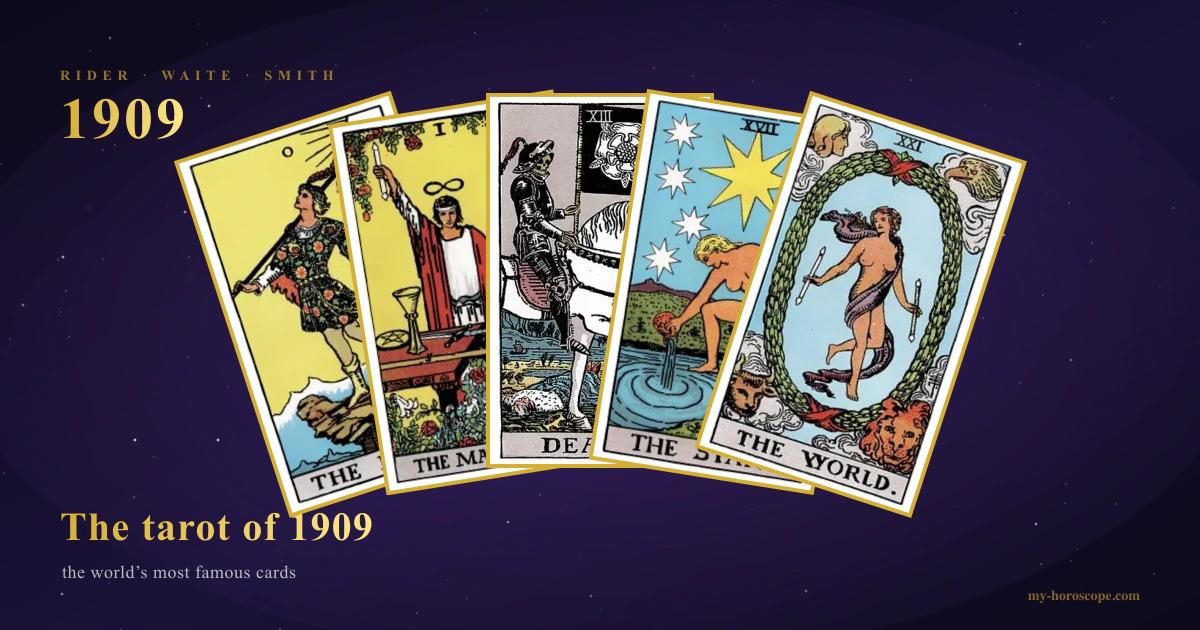
Five Major Arcana cards from the 1909 Rider-Waite-Smith tarot: the Fool, the Magician, Death, the Star, and the World
Five Major Arcana cards from the Rider-Waite-Smith deck we use: the Fool, the Magician, Death, the Star, and the World
1

Who created the Rider-Waite-Smith tarot?

The Rider-Waite-Smith tarot was created in London in 1909 by two people. Arthur Edward Waite, a scholar of mysticism, planned the deck and its symbolism. Pamela Colman Smith, a 31-year-old illustrator, drew all 78 cards in about six months. The publisher William Rider & Son released it that December. More than a century later, it’s the deck most English-language tarot books, courses, and apps are built on.

Smith was paid a flat fee. She got no royalties and no share of the sales, and for decades her name wasn’t even on the box. She died in 1951, in debt and almost forgotten, and was buried in an unmarked grave in Cornwall, in the southwest of England.

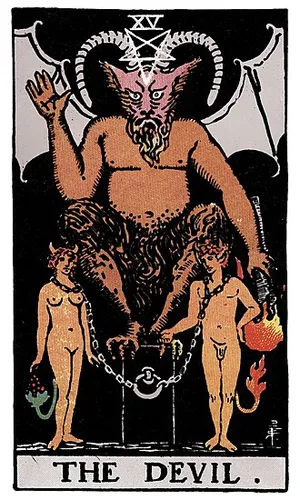
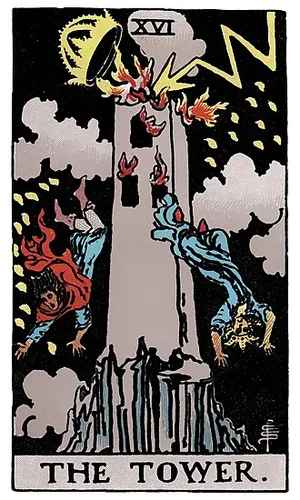
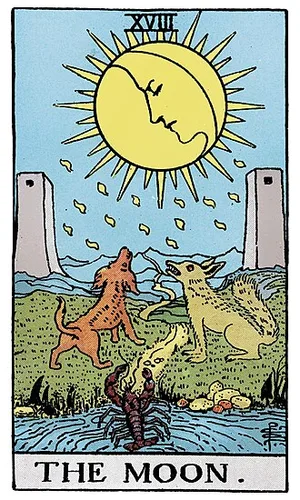
Her pictures outlived all of it. They’re printed in dozens of languages, copied and redrawn by hundreds of later artists, and they’re the cards you see in tarot readings on My Horoscope.
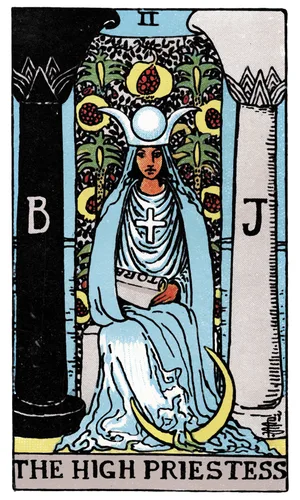
The High Priestess, the second card of the Major Arcana, drawn by Pamela Colman Smith in 1909
The High Priestess (II), one of the best-known images in tarot. Artwork from 1909.

This is the story of those cards, and of the woman who drew them and got very little credit while she was alive.
2

Where did tarot come from before 1909?

Tarot did not start out as a tool for readings. It began in northern Italy in the 15th century as a card game called trionfi, later tarocchi. Among the oldest surviving cards are the Visconti-Sforza decks, hand-painted and gilded for the ruling families of Milan around the middle of the 1400s. They were luxury objects, closer to a commissioned artwork than to a pack of playing cards.

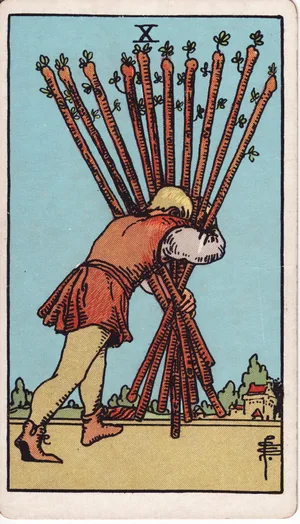
The most interesting ancestor is the Sola Busca tarot, engraved in northern Italy around 1491. It’s the oldest complete 78-card tarot deck that survives, and the first known deck in which the numbered suit cards show full scenes with people, not just rows of cups or swords. That idea then all but disappeared for four centuries. In 1907, photographs of the Sola Busca cards went on display at the British Museum in London, two years before Smith began her own deck. Several of her cards, the Three of Swords and the Ten of Wands among them, closely echo Sola Busca images.

The mystical side of tarot arrived in France in the late 18th century. In 1781 the scholar Antoine Court de Gébelin announced, with no evidence at all, that tarot was a book of secret wisdom from ancient Egypt. It wasn’t true, but the story stuck. Within a few years a Parisian fortune-teller who went by Etteilla was selling the first deck designed for divination, and in the 1850s the occult writer Éliphas Lévi tied the cards to Kabbalah and the Hebrew alphabet.

By the end of the 19th century those ideas had settled in London, in a secret society called the Hermetic Order of the Golden Dawn, founded in 1888. Its members studied astrology, Kabbalah, alchemy, and tarot as one connected system. They included the poet W. B. Yeats, the actress Florence Farr, the writer Arthur Machen, and a bookish researcher named Arthur Edward Waite.

3

Who were A. E. Waite and Pamela Colman Smith?

Arthur Edward Waite (1857 to 1942) was born in Brooklyn, New York, and raised in England by his English mother. He joined the Golden Dawn in 1891 and wrote dozens of books on mysticism, alchemy, Freemasonry, and the Holy Grail. After the order split in 1903, he led his own branch. Waite was a scholar, not an artist. He knew which symbols he wanted in a tarot deck, and he needed someone who could turn them into pictures.

He chose Pamela Colman Smith (1878 to 1951), known to her friends as “Pixie.” She was born in London to American parents, spent part of her childhood in Jamaica, and studied art at the Pratt Institute in Brooklyn. Back in London she worked in the theater world around the Lyceum, working with the company of Henry Irving and Ellen Terry and illustrating books, including work by Bram Stoker and W. B. Yeats. In 1907 Alfred Stieglitz showed her drawings at his New York gallery, 291, which until then had exhibited only photography. She joined the Golden Dawn in 1901, and that’s where she met Waite.

She completed the commission in roughly six months in 1909: all 78 cards, meaning the 22 Major Arcana and, for the first time in a widely sold deck, 56 fully illustrated Minor Arcana cards. Waite gave detailed direction for the Major Arcana and a handful of other cards. For most of the Minor Arcana, the scenes are generally thought to be Smith’s own invention. William Rider & Son published the deck in London in December 1909. Waite’s companion book, The Key to the Tarot, followed, and an illustrated edition, The Pictorial Key to the Tarot, came out in 1911.

For most of the 20th century the cards were sold as the “Rider-Waite” deck, named for the publisher and the author. The artist wasn’t mentioned. In recent decades tarot writers and readers have pushed for “Rider-Waite-Smith” (often shortened to RWS), or simply “Waite-Smith,” so that the person who actually drew the cards is part of the name.

“I’ve just finished a big job for very little cash!”
Pamela Colman Smith, writing to Alfred Stieglitz about the tarot designs, November 1909
4

Why did the Rider-Waite-Smith deck change tarot?

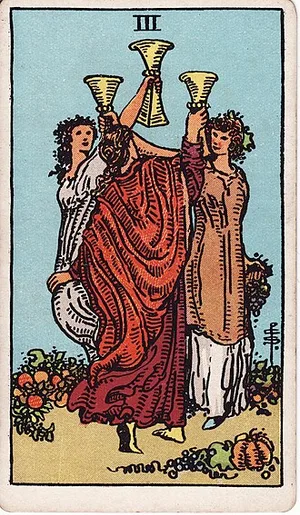
Before 1909, the Minor Arcana in most tarot decks looked like ordinary playing cards. The Three of Cups was three cups. The Five of Swords was five swords in a pattern. There was no scene and no story, which made those 56 cards close to unreadable unless you’d memorized a meaning for each one.

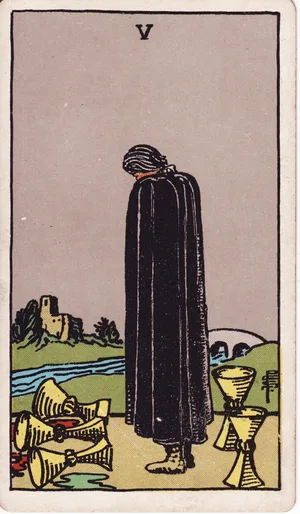
Smith turned every one of them into a scene with people, a mood, and a story. Suddenly you didn’t need to know Kabbalah to read a card. Look at the Five of Cups: a figure in a black cloak stares down at three spilled cups, with two full ones standing behind them, unnoticed. Anyone can see what it’s about. You’re grieving what you lost and missing what you still have.
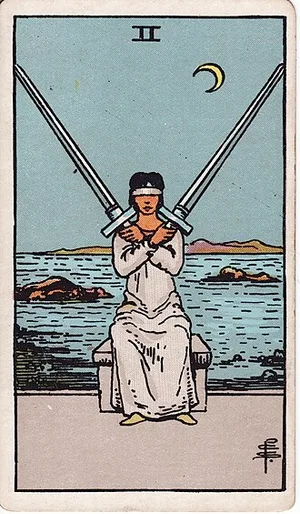
That one decision made tarot readable for complete beginners while leaving plenty for a lifetime of study. Smith packed each card with small details (hand gestures, the color of a robe, flowers, animals, the landscape in the background), and readers are still finding new angles in them.

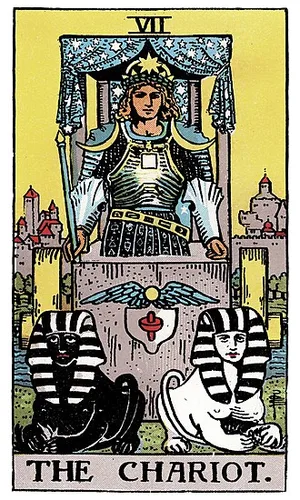
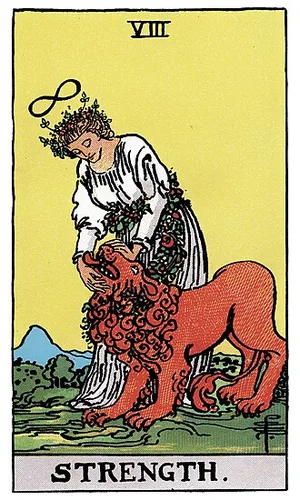
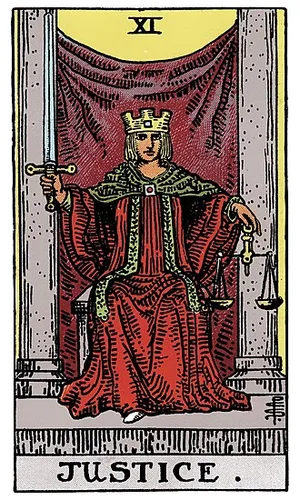
Waite made a quieter change too. Older decks numbered Justice as VIII and Strength as XI. He swapped them, so that Strength is VIII and Justice is XI, to match the astrological order the Golden Dawn used (Leo before Libra). Most modern decks follow his numbering.

The result is that the RWS became the template for hundreds of later decks. Readers talk about the “RWS tradition”: a whole family of decks, such as the Universal Waite, the Radiant Rider-Waite, the Morgan-Greer, and a long list of modern redraws, that keep her compositions and symbols. A fair comparison is type design. Smith drew the alphabet, and everyone since has been cutting their own fonts from it.

5

The Major Arcana: all 22 cards

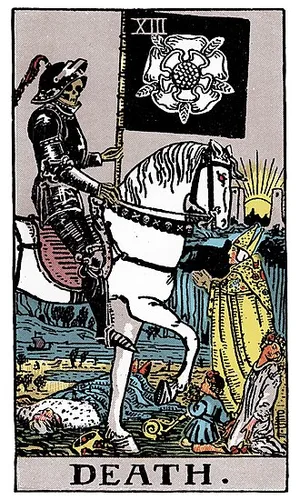
The Major Arcana is a set of 22 archetypes, from the innocence of the Fool (0) through the transformation of Death (XIII) to the wholeness of the World (XXI). When one of these cards turns up in a reading, it usually points to a major life theme, not a small everyday matter.

The American tarot writer Eden Gray, whose books introduced the deck to many readers in the United States in the 1960s and 1970s, described the path from the Fool to the World as the Fool’s Journey: 22 stages of growing up. Here’s how Smith drew it:

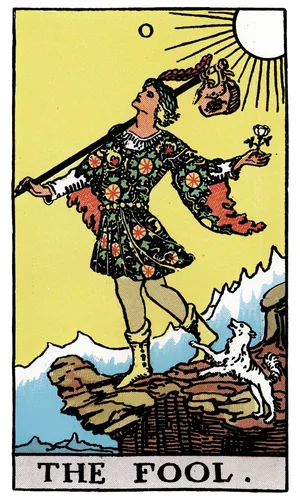
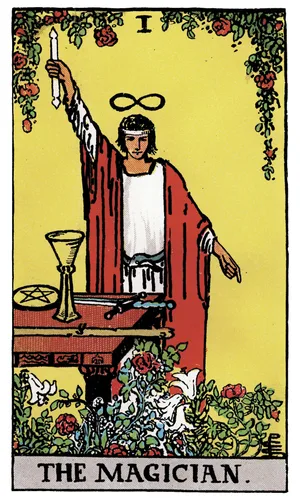
Look at the small things. The white dog at the Fool’s heels. The veil hanging between the two pillars behind the High Priestess. The infinity sign floating over the Magician’s head. Each detail was put there on purpose, and each one gives a reader something to work with.

Pull a card of the day and see how one of these images lines up with what’s going on in your life right now.

6

The Minor Arcana: Cups (feelings and love)

The Minor Arcana has 56 cards in four suits. Each suit goes with an element and a part of life. Start with the one that comes up most in readings about relationships: Cups.
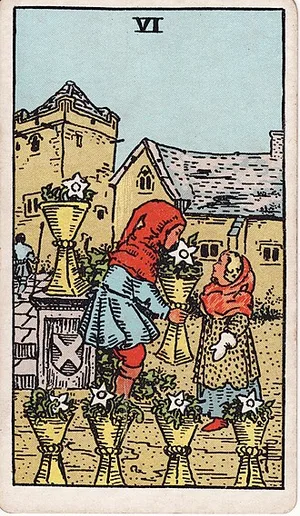
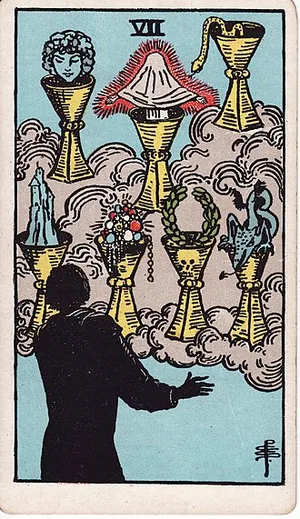
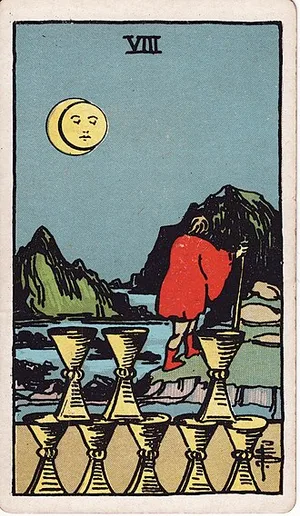
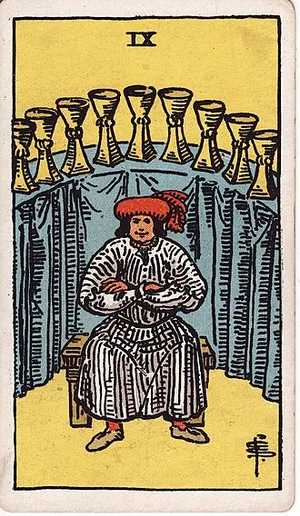
Cups are water: feelings, relationships, love, and intuition. When a reading is full of Cups, the question is about the heart. What are you feeling? Who’s on your mind? What are you afraid to want?

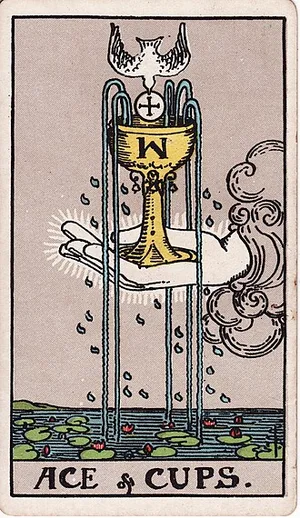
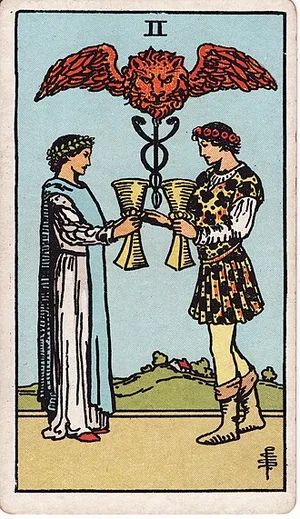
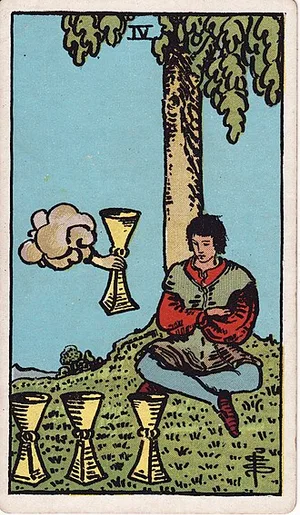
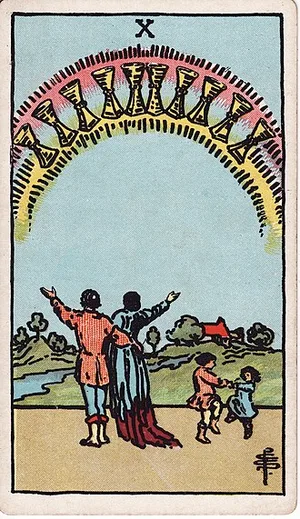
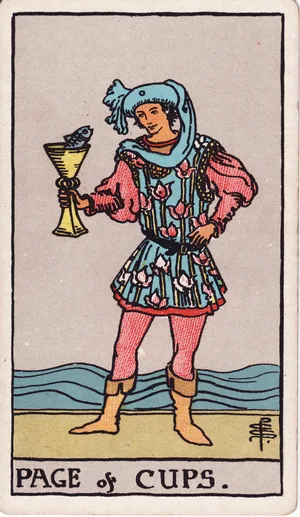
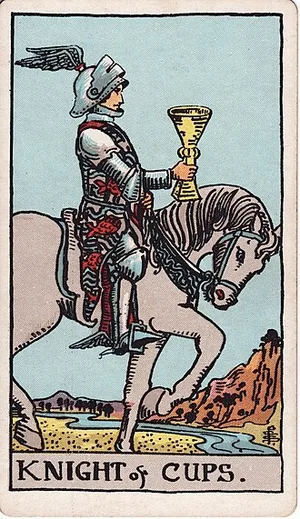
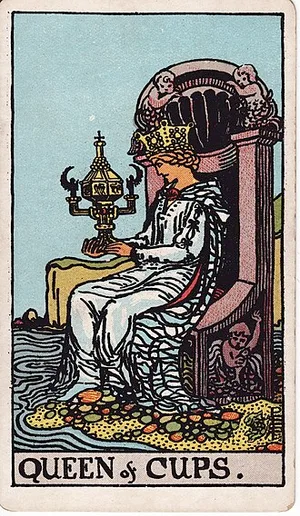
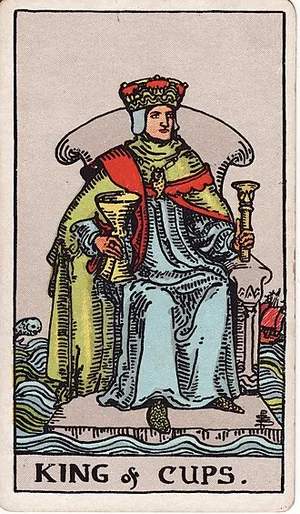
Follow the suit from start to finish. The Ace of Cups is a single cup with five streams of water pouring from it, a feeling just beginning. The Ten of Cups is a family under a rainbow, happiness shared. Then come the court cards, which often stand for people in your life: the Page as a young dreamer, the Knight as a romantic on a quest, the Queen as someone deeply empathetic, and the King as a person who feels a lot and stays steady anyway.

7

The Minor Arcana: Swords (mind and conflict)

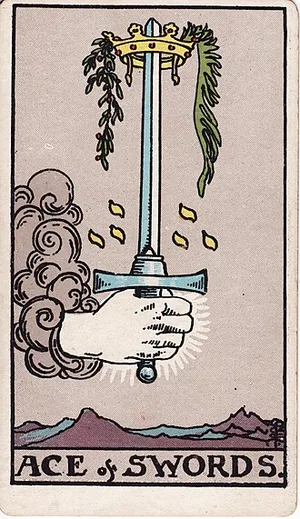
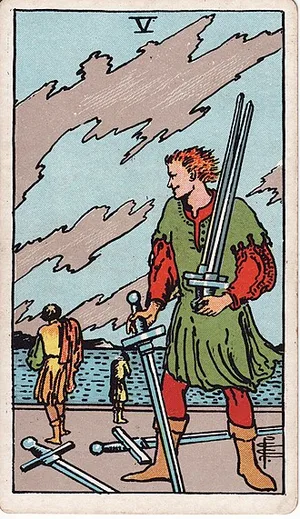
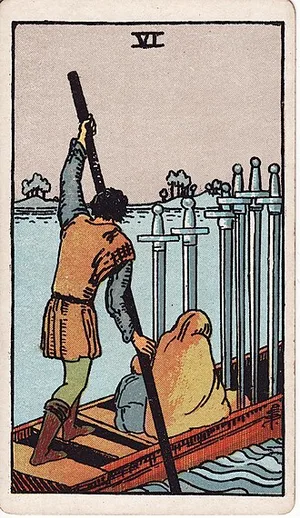
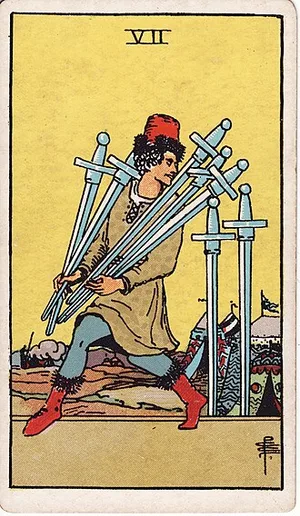
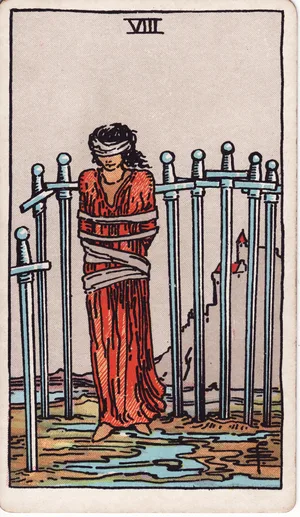
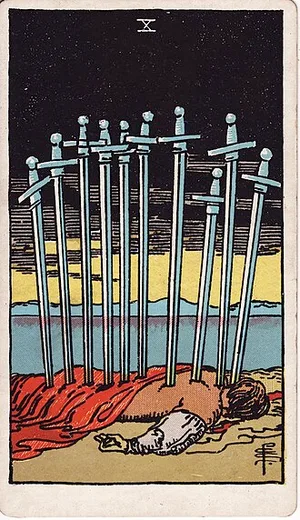
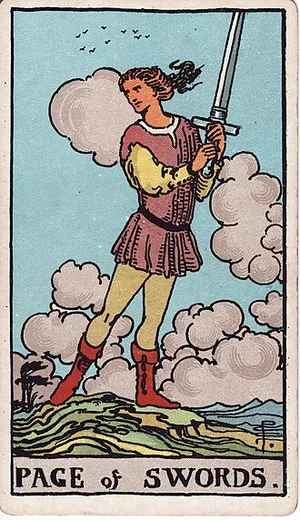
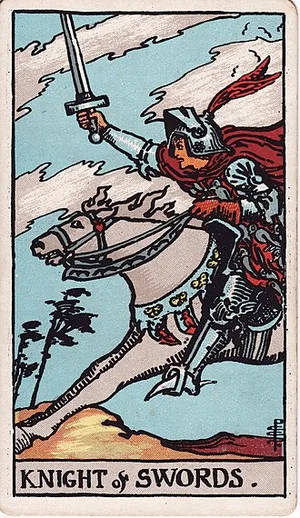
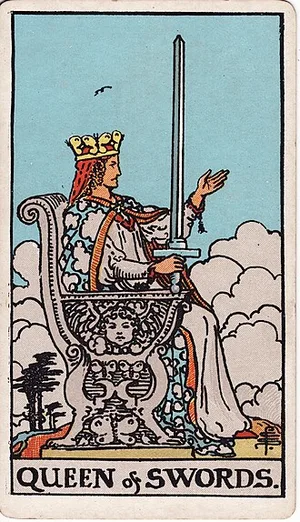
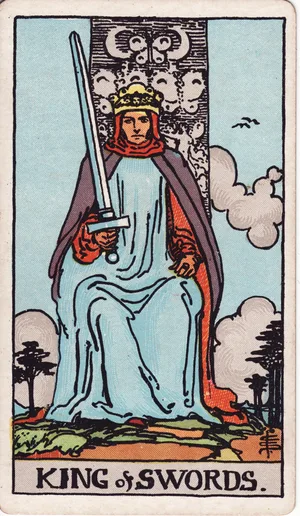
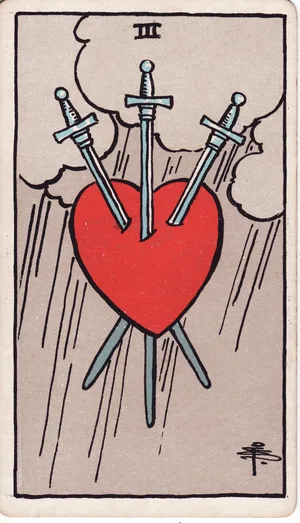
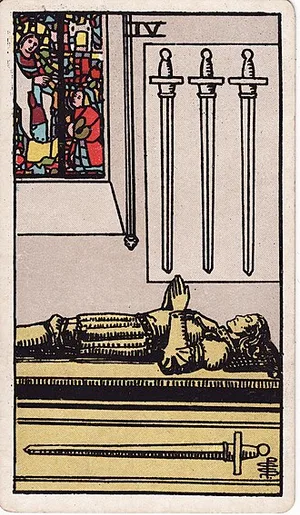
Swords are air: thought, communication, conflict, and truth. This is the most dramatic suit in the deck, and it holds the most painful images. A blindfolded woman stands bound among eight swords. A figure lies face down under a black sky with ten swords in their back. A heart is pierced by three blades.

That doesn’t make them “bad” cards. Swords tell the truth, including the kind that stings. Often the thing you’re afraid to admit is the thing you most need to look at.

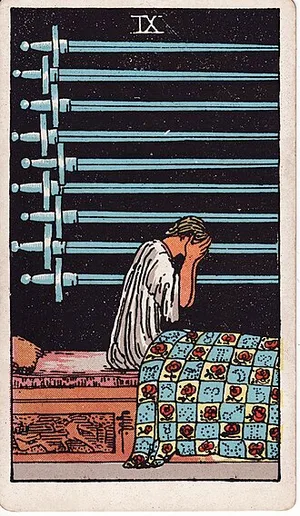
The Nine of Swords is one of the most recognizable cards of all 78: someone sitting up in bed, face in their hands, with nine swords hanging on the wall behind them. It’s the card of 3:00 AM, when every worry looks like a catastrophe. Notice what Smith left out, though. None of the swords is touching the figure. The fear is real, but most of it is in the mind.

8

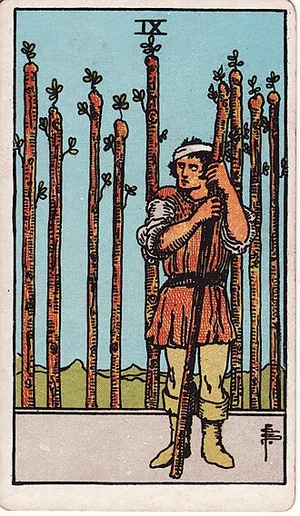
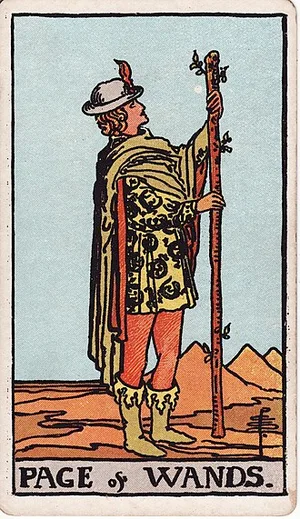
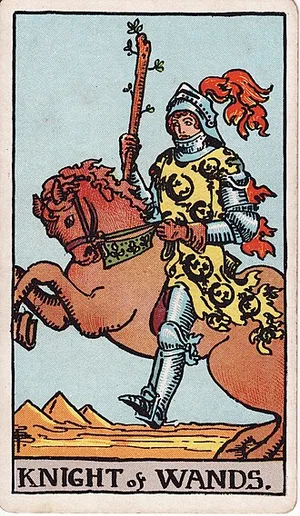
The Minor Arcana: Wands (action and passion)

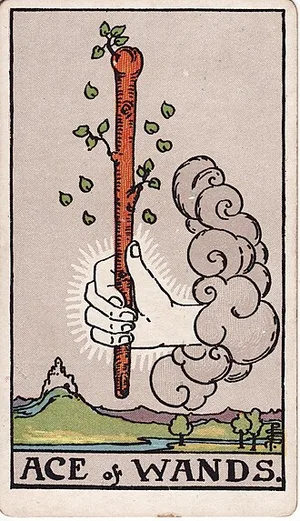
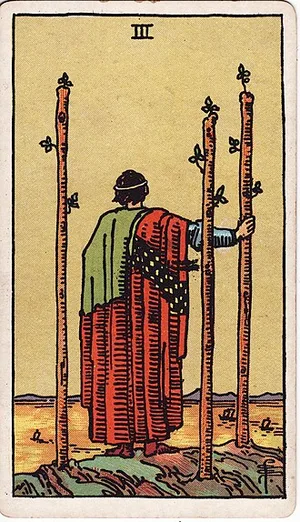
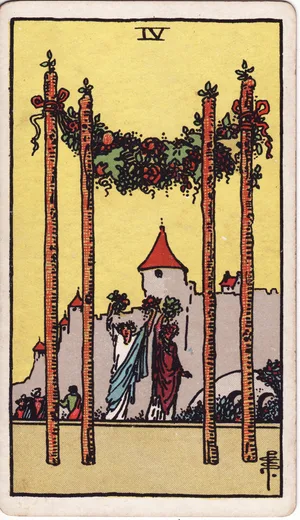
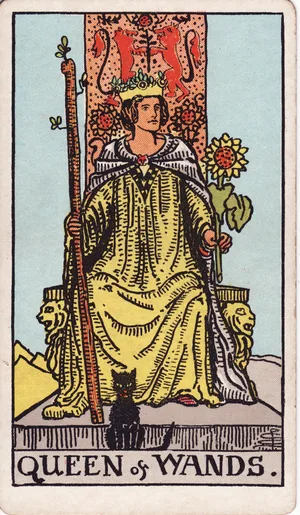
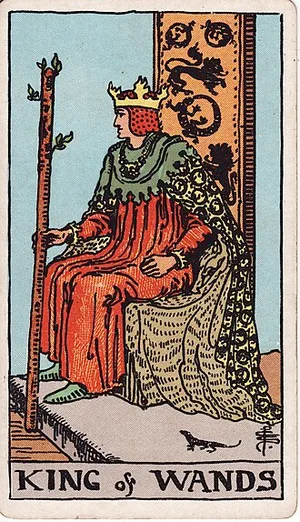
Wands are fire: creativity, action, passion, and ambition. Wands are the energy that gets you out of bed. Inspiration, enthusiasm, the nerve to start something. Without them you wait around for life to come to you.

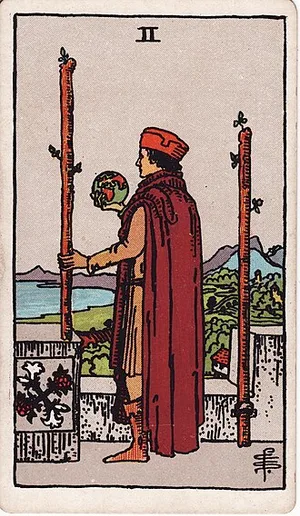
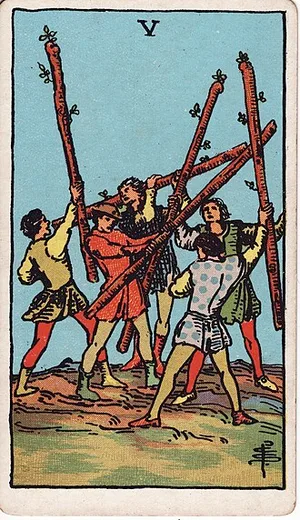
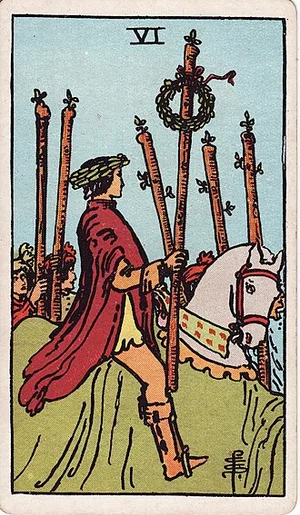
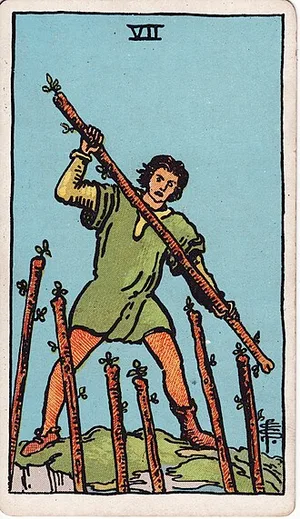
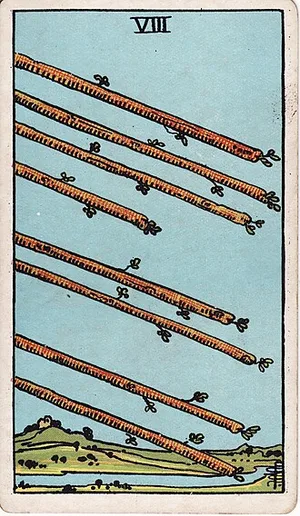
Smith drew the wands as living branches with small green leaves, not smooth wooden rods. It’s a quiet reminder that creative energy grows and is never quite finished. In the Two of Wands, a figure stands on a castle wall holding a globe and looking out over the sea. It’s the moment when you have a world of options in your hand and have to choose a direction.

9

The Minor Arcana: Pentacles (money and work)

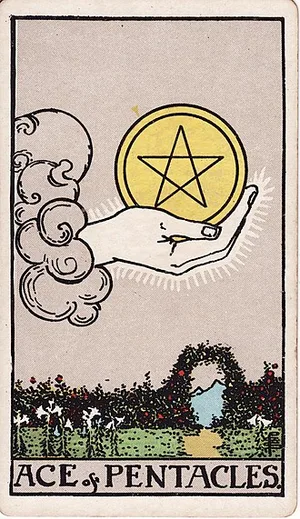
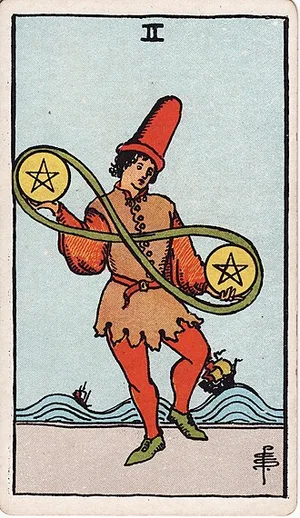
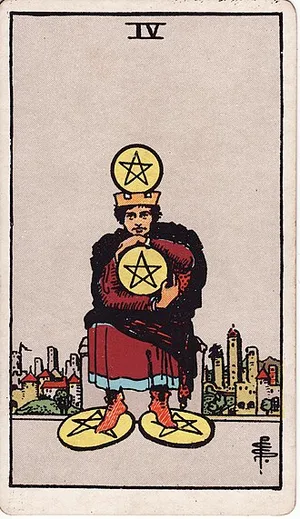
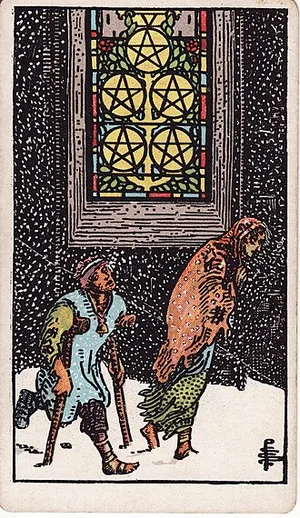
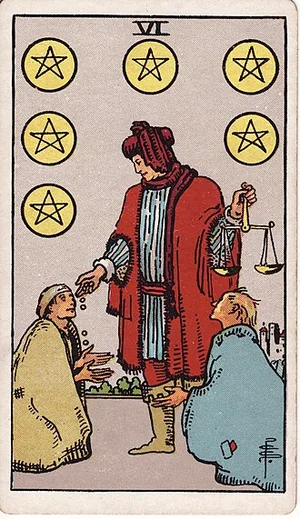
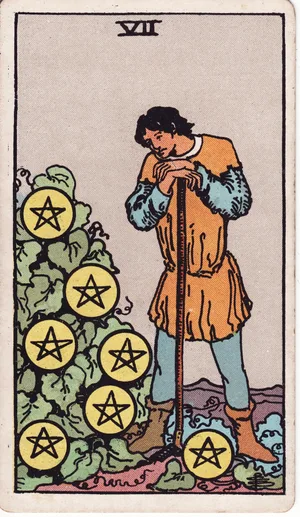
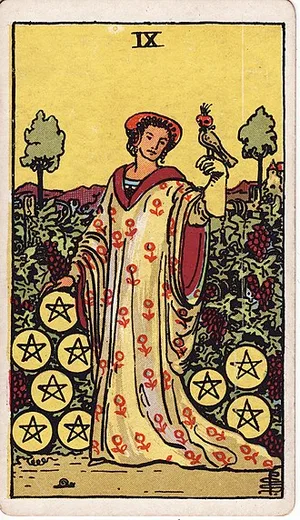
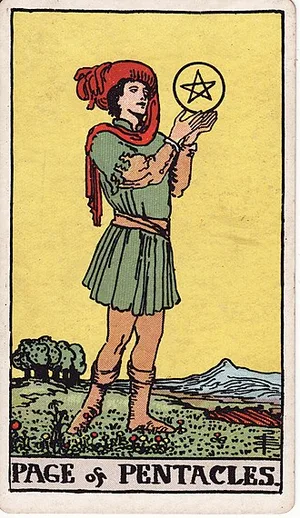
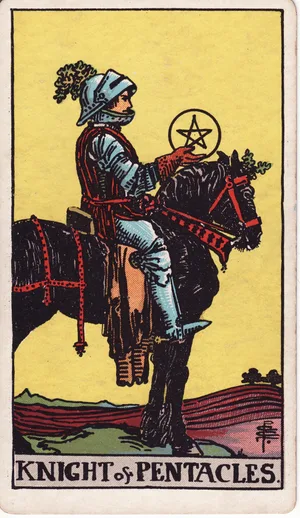
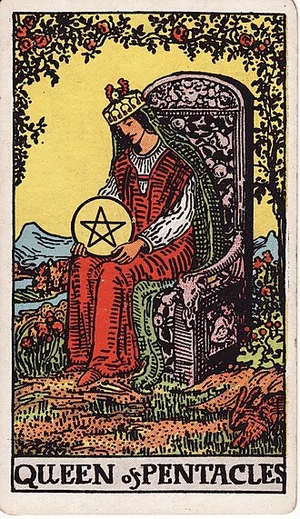
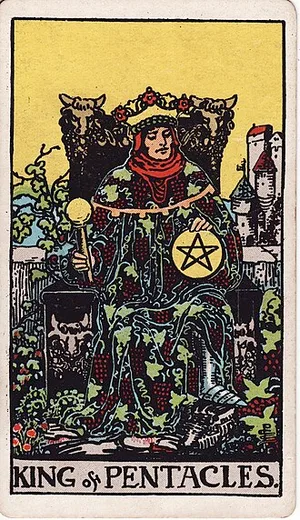
Pentacles are earth: money, work, the body, and the material world. They’re down to earth in the best sense. They ask practical questions. How do you make a living? Is there a roof over your head? Are you taking care of yourself? Can you keep this up?

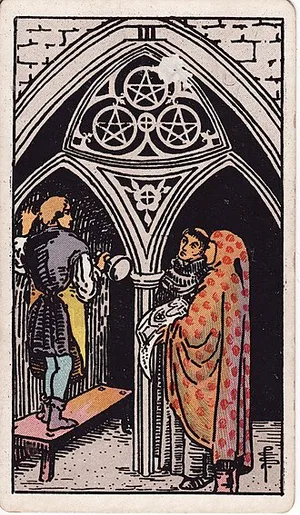
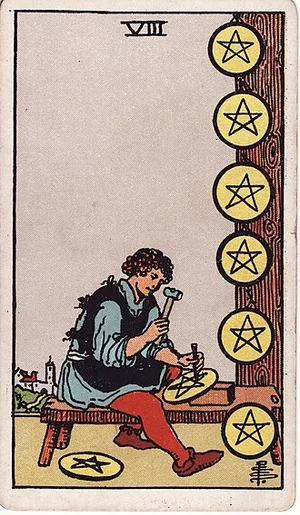
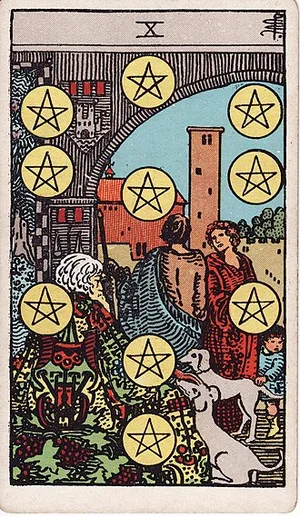
A favorite is the Eight of Pentacles: a craftsman at his bench, carving one pentacle after another, focused and patient. It’s the card of getting good at something by repeating it. Nothing big happens fast. The Ten of Pentacles shows where that leads: an old man with his family and dogs under an archway, wealth that lasts longer than one lifetime.

10

Four hidden details in the Rider-Waite-Smith cards

Waite and Smith filled the cards with symbols that reward a second look. More than a hundred years later, readers are still pointing them out. Here are four worth knowing:

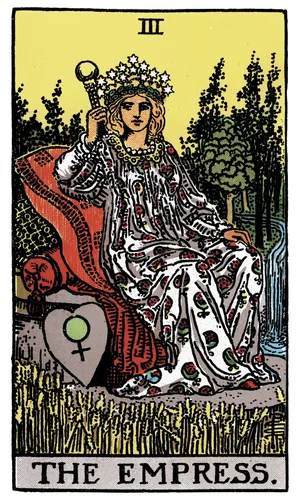
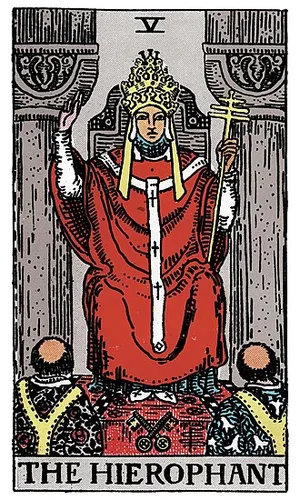
  1. Lilies and roses. The Magician stands in a garden of white lilies (clear intention) and red roses (desire). The same two flowers show up on the robes of the monks kneeling before the Hierophant. The message is that making something real takes both a clean purpose and some heat.
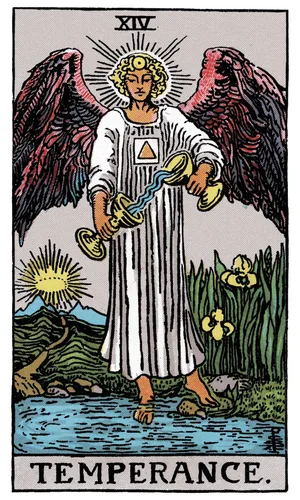
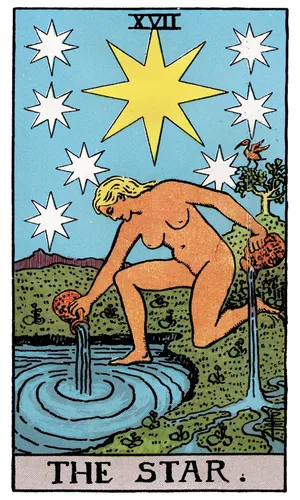
  2. The same water in the Star and Temperance. Both cards show a figure with two vessels, pouring. In Temperance the water flows from one cup to the other. In the Star it’s poured out onto the land and into a pool. The two cards sit three places apart, and the shared image links them: first you find your balance, then you give freely.
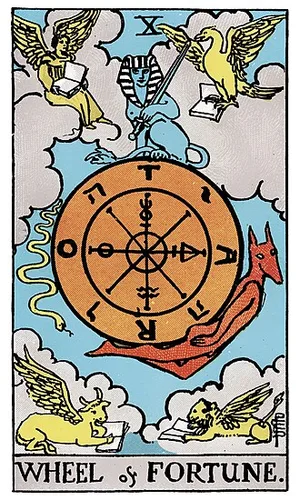
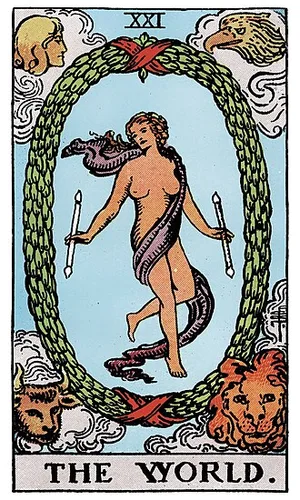
  3. The four creatures on the World. In the corners of the World card you’ll find a human face, an eagle, a bull, and a lion. They come from the Book of Ezekiel, and in Christian art they stand for the four evangelists. In astrology they match the four fixed signs: Aquarius, Scorpio, Taurus, and Leo. The same four appear on the Wheel of Fortune.
  4. Smith’s signature. Almost every card carries her small monogram, the letters PCS woven into a single curling shape, usually tucked into a bottom corner. Some are easy to spot and some hide in the grass or the shadows. Collectors make a game of finding them.
11

What happened to Pamela Colman Smith?

Smith never earned royalties from the tarot. She kept working as an illustrator, storyteller, and publisher of her own small magazine, but the commissions thinned out. She converted to Catholicism in 1911. After World War I she used an inheritance from an uncle to move to Cornwall, where she ran a vacation home for Catholic priests. It didn’t make money.

She died on September 18, 1951, in the seaside town of Bude, Cornwall, at 73, unmarried, in debt, and largely forgotten. Her belongings, including her artwork, were sold to pay what she owed. She was buried in an unmarked grave, and the exact spot is no longer known.

The cards, meanwhile, kept selling. In 1971 the American publisher U.S. Games Systems, founded by Stuart Kaplan, began printing the deck for the American market, just as interest in tarot was surging. It has stayed in print ever since and has sold in the millions.

Recognition came late. Kaplan spent decades collecting her work and helped bring her story back into print. In 2009, for the deck’s hundredth anniversary, U.S. Games issued a commemorative edition under the name Smith-Waite Centennial, with her name first. Since then there have been biographies, museum exhibitions, and a wider habit of calling the deck by all three names.

So when you tap a tarot card in almost any app today, ours included, you’re most likely looking at a picture drawn by a young illustrator who called the job “very little cash” and whom almost nobody had heard of until long after she was gone.

12

Why My Horoscope uses the Rider-Waite-Smith deck

On My Horoscope we use the original 1909 artwork, the way Pamela Colman Smith drew it.

There are two reasons we chose this deck:

  • It’s the standard. If you ever want to study tarot seriously, more has been written in English about these 78 images than about any other deck. What you learn from a reading here carries over to nearly any book, class, or physical deck you pick up later.
  • It’s legal and out in the open. The 1909 images are in the public domain, so we aren’t taking work from a living artist. We’re working with a piece of art history that now belongs to everyone. Writing articles like this one is our way of giving Smith some of the credit she didn’t get.

If you’d like to see the cards in action, start with the free card of the day, or read our tarot guide for beginners first. For a specific question, the three-card spread is the easiest member reading to start with: you ask, pull your cards, and get a reading written around your question, in a tradition that one young artist turned into 78 pictures more than a century ago.

Frequently asked questions

Q:When was the Rider-Waite tarot deck first published?

The deck was first published in London in December 1909 by William Rider & Son. Pamela Colman Smith drew the 78 cards earlier that year under the direction of Arthur Edward Waite. Waite’s companion text, The Key to the Tarot, followed, and an illustrated edition called The Pictorial Key to the Tarot appeared in 1911.

Q:Who was Pamela Colman Smith?

Pamela Colman Smith (1878 to 1951) was an illustrator born in London to American parents. She spent part of her childhood in Jamaica, studied at the Pratt Institute in Brooklyn, and joined the Hermetic Order of the Golden Dawn in 1901. She drew all 78 cards of the Rider-Waite-Smith tarot for a flat fee, earned no royalties, and died in debt in Cornwall.

Q:Why is it called the Rider-Waite-Smith deck?

“Rider” is the original publisher, William Rider & Son. “Waite” is Arthur Edward Waite, who planned the deck and its symbolism. “Smith” is Pamela Colman Smith, who drew it. For most of the 20th century it was sold as the Rider-Waite deck. Adding Smith’s name is a more recent practice that gives the artist her credit.

Q:What makes the Rider-Waite-Smith deck different from older tarot decks?

Older decks showed the 56 Minor Arcana cards as simple arrangements of cups, swords, wands, and coins. Smith gave every card a full scene with people and a story, so a beginner can read the picture without memorizing a list of meanings. That approach became the model for hundreds of later decks and most modern tarot guides.

Q:Is the Rider-Waite tarot in the public domain?

The original 1909 images are in the public domain in the United States, where works published before 1929 are no longer under copyright. In the United Kingdom and the European Union they entered the public domain on January 1, 2022, 70 years after Smith’s death. Later recolored editions and deck names can still be protected, so check before reusing a modern printing.

Q:Was A. E. Waite American?

By birth, yes. Arthur Edward Waite was born in Brooklyn, New York, in 1857 to an American father and an English mother. After his father died, his mother took him back to England as a small child, and he lived there for the rest of his life. He is usually described as a British writer and mystic.

Q:Can I try a reading with the Rider-Waite-Smith cards for free?

Yes. On My Horoscope the card of the day uses the 1909 Rider-Waite-Smith artwork and is free once a day with a free account. Readings with more cards, such as the three-card spread or the Celtic Cross, are included in a membership (5 a month with Star, 15 with Cosmos or Oracle), or you can buy one extra reading for $1.99.

Get a horoscope written for you

Sign up for free and get a daily horoscope based on your birth chart, a tarot card of the day, and deeper readings.